
🦺 I-80 Construction Alert 🦺
Wasatch Back Travel Tips
How to Prevent Your Vehicle from Sparking a Fire
Updated:
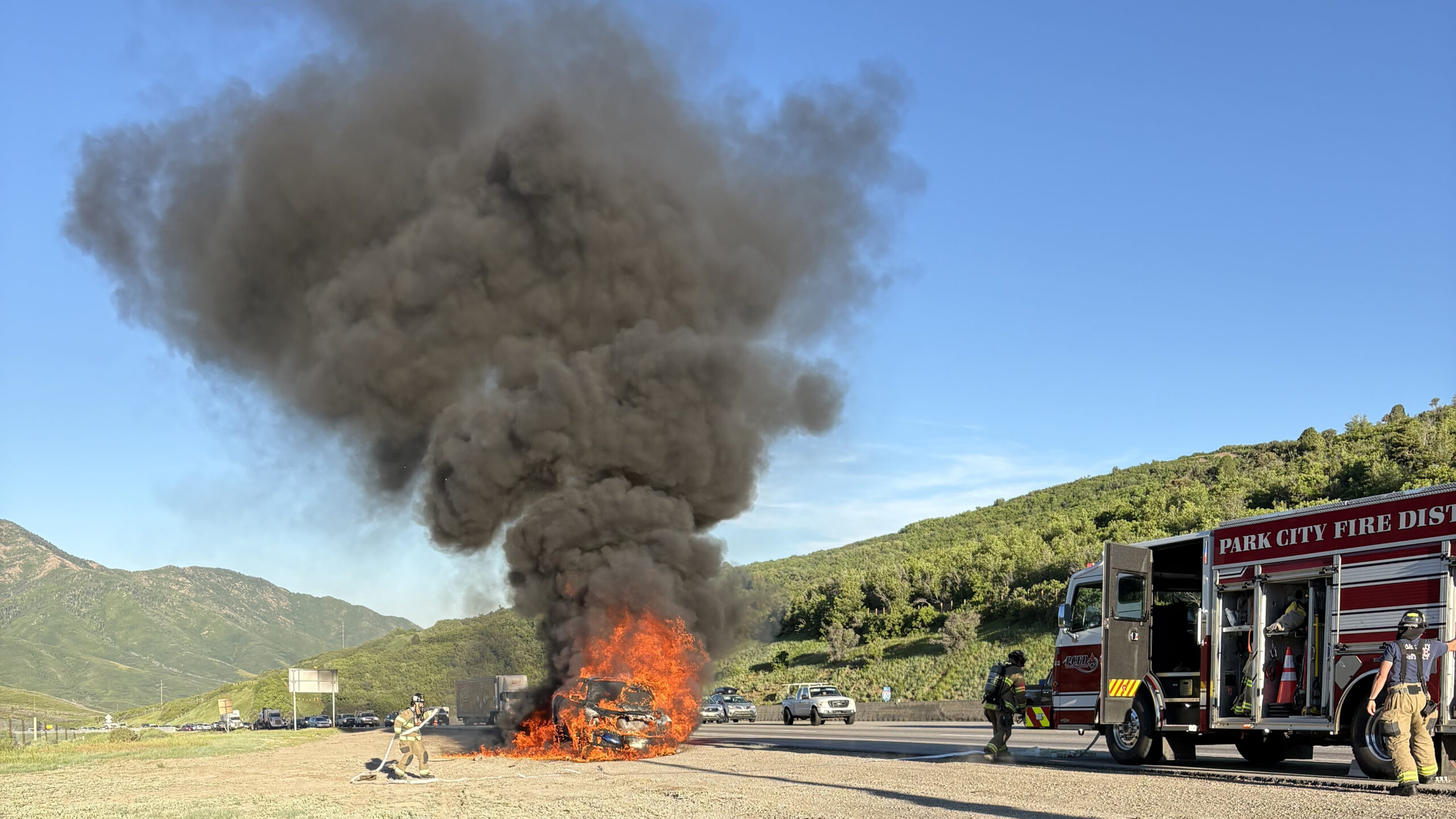
How can a vehicle start a wildfire if there is no open flame?
Only you can prevent roadside fires! Roughly 85% of wildfires in the U.S. are human-caused, and many of those start from a vehicle.
- The heat from your exhaust or catalytic converter can ignite dry grass or leaves that get stuck in your undercarriage, or if you’re parked on dry vegetation.
- Metal parts, such as dragging chains or a tire rim, can create sparks from hitting the pavement.
- Mechanical or electrical issues can start an engine fire, which can then spread, especially if the hood is opened.
Parleys Canyon has experienced multiple major wildfires that began with a spark on I-80 — all preventable. Follow these tips to keep your car fire-safe.
Top fire safety tips for your vehicle
Before you hit the road…
- Secure your trailer chains. Metal chains + asphalt + high speeds = sparks. Ensure your trailer chains are properly secured and lifted completely off the ground. Dragging chains against asphalt acts like a flint, showering nearby vegetation with sparks.
- Check your tires and brakes. Worn out brake pads and tires, along with low tire pressure that exposes the rim, can create sparks. Overloaded or poorly maintained trailers can blow a tire, causing the metal wheel rim to scrape the road. Checking your tire pressure and inspecting bearings/axles help prevent this.
- Check your coolant levels. An overheated vehicle can set your engine on fire, which then starts the grass on the shoulder on fire. Ensure your exhaust line is securely bolted and not sagging. Vehicles with poor engine maintenance can also shoot carbon fragments or internal sparks from the tailpipe.
- Know what your car warning indicators mean. Battery or engine overheating? Pull over.
- Check local fire restrictions. Be aware of any off-road driving or parking bans. Any internal combustion engine — including motorcycles, ATVs, and side-by-sides — may be subject to spark arrester regulations to be operated on public land trails.
- Check local fire danger. During Red Flag Warning days, you need to be vigilant with your vehicles and trailers. Even standard driving practice — like tapping your brakes and creating a brief metal-on-metal spark — can ignite dry grass on a windy roadside.
- Check UDOT Traffic. Active wildfires or severe fire danger can cause sudden, sweeping highway closures. Before departing, use resources like state 511 systems or UDOT Traffic to check for emergency road closures along your planned route.
👉 Learn more about local fire danger at https://utah-fire-info-utahdnr.hub.arcgis.com/pages/fire-danger
While you’re traveling…
- Carry a fire extinguisher. This will help you on the road and when you get to your destination. Driving can expose vehicles to electrical malfunctions, fuel leaks, or intense friction from faulty brake pads. Having an ABC-rated dry chemical fire extinguisher securely mounted in your vehicle allows you to suppress a sudden engine or undercarriage flare-up before it can spread to nearby wildland brush. Beyond the road, an extinguisher provides additional safety at your campsite, trailhead, or staging area.
- Keep an eye on your rearview mirror to spot tire or trailer issues early. A trailer blowout or a dragging safety chain can occur completely unnoticed until it is too late. Frequently checking your rearview mirror allows you to spot unusual smoke, a dropping trailer frame, or shifting cargo immediately. Don’t leave a trail of sparks behind you.
- Check on your vehicle. Long drives, hot weather, and heavy towing put stress on your vehicle’s mechanical systems. Making it a habit to perform a quick walk-around inspection every time you stop for gas or a rest break prevents catastrophic failures on the road. During your walk-around, check coolant levels and that all your vehicle and trailer tires are properly inflated.
- Don’t toss your cigarette out the window. The wind generated by a moving vehicle turns a discarded cigarette into an active ember, fanning the heat and keeping it alive as it lands. Keep a sealable, water-filled container in your cup holder to safely extinguish and dispose of smoking materials. Small sparks can start large fires.
When you get there…
- No parking on dry vegetation. Your vehicle’s incredibly hot undercarriage can easily ignite dry grasses. This also means your UTVs and dirt bikes.
- Follow local fire restrictions. Depending on where you’re going, restrictions might be different than where you came from. Check Utah Fire Info for details.
- Plan a safe route and know your vehicle capabilities. If you are traveling through a high fire danger area, think about the route you’ll take home. Fire weather can shift wind directions quickly so the route you drive in might not be the same way you’ll drive out if roads are blocked by smoke or flames.
- Drive alert. If you need to travel through a smoky zone, keep your headlights on low beam (high beams reflect off the smoke and worsen visibility) and use the painted white line on the right edge of the pavement as a guide.
What do I do if my car is on fire?
- Pull over as soon as safely possible.
- If you’re on a highway, it is safest to pull over on the right shoulder. Park on pavement, gravel, or dirt; avoid tall grass or other dry vegetation.
- Turn off the engine and exit the vehicle. Stay away from the vehicle and from traffic.
- Call 911 and give them your location. Including the highway name, mile marker, direction, and any notable landmarks is helpful information.
Driving an electric vehicle?
While electric vehicles (EVs) are statistically far less likely to catch fire than internal combustion engine vehicles, their high-voltage battery systems pose unique considerations when driving in wildfire-prone areas. Because a lithium-ion battery fire burns significantly hotter, releases highly toxic gases, and is difficult to extinguish once ignited, fire prevention and awareness are critical.
What if a fire starts?
White smoke coming off an EV battery on your vehicle is a big red flag. Pull over, turn off, and dial 911.
- Pull over and get all occupants out of the vehicle immediately. Do not stand downwind, burning lithium-ion batteries can release highly toxic gases like hydrofluoric acid.
- Call 911. Let the operator know it is an EV and the make and model so first responders bring the proper safety gear for a potential battery fire.
Where should I park?
Like gas-powered cars, EVs have hot undercarriage components such as electric motors, power electronics, and battery thermal management systems.
- Never park an EV over tall, dry grass or brush. The heat radiating from beneath the vehicle can easily ignite dry vegetation and start a fast-moving wildfire.
- Park your EV in well-ventilated areas, especially if you’ve just completed a long drive or charging session. Adequate ventilation helps dissipate heat and reduces the risk of overheating.
How can I prevent my EV from starting a fire?
- Maintenance: Follow all guidelines provided by the EV manufacturer regarding vehicle operation, maintenance, and safety.
- Charging: When charging at campsites or remote trailheads, only use certified, manufacturer-approved charging cables and adapters. Never use multi-plug adapters or damaged extension cords to charge your EV, as these can overheat and spark a ground fire in dry forest environments.
- Parking: Always park on asphalt, concrete, or cleared dirt when traveling through high-risk areas.
- Choose your route: Avoid driving low-clearance EVs on rugged terrain where undercarriage impacts are likely. Most EVs house their heavy battery packs along the floorboard of the vehicle. If you are driving off-highway or on poorly maintained roads to reach recreational areas, a hard strike from a rock or debris can puncture or compromise the battery casing. Puncture damage can trigger “thermal runaway” — a self-sustaining chemical reaction that causes the battery to catch fire.
👉Learn more about how to avoid starting an EV fire by visiting https://www.nfpa.org/education-and-research/energy-transition/electric-vehicles
What is UDOT doing for fire prevention?
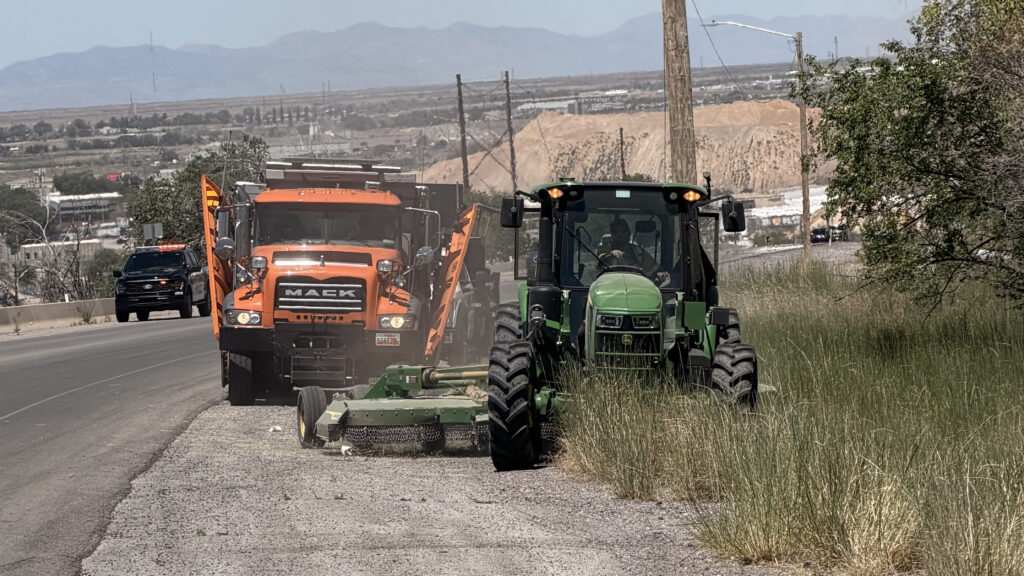
As conditions allow, road crews mow the road shoulders to help prevent wildfires by keeping vegetation short.
To make sure we don’t spark a fire, a snow plow filled with water follows along.
It’s a Red Flag Warning day. What does that mean?
A Red Flag Warning is an official alert issued by the National Weather Service. It means critical fire weather conditions are either happening right now or are imminent within the next 24 hours.
In other words, the weather has created a “perfect storm” for wildfires. If one starts under these conditions, it can spread quickly and become nearly impossible to control. Red flag weather means a combination of warm temperatures, exceptionally low humidity, and high winds is expected.
Dry air + high winds + hot temps = red flag warning 🚩
👉 Check for Red Flag Warnings on the Utah Fire Info website before you leave, scroll down to “National Weather Service Watches and Warnings”.
Where can I find information about current fire restrictions?
Specifics of what is forbidden or allowed will vary slightly by agency, and between individual orders. Always read the active fire restrictions and check with the issuing authorities.
Check active fire restrictions for Utah’s state and federal lands, or here is a list of municipal fire restrictions.
What are Stage 1 and Stage 2 fire restrictions?
Stage 1:
- No open fires of any kind except within established public facilities in improved campgrounds, picnic areas. -OR- In permanently constructed fire pits at private homes where running water is present.
- No smoking, except within an enclosed vehicle, trailer or building, a developed recreation site or while stopped in an area that is paved or free from dry vegetation.
- No fireworks, tracer ammunition or other pyrotechnic devices including exploding targets.
- No cutting, welding or grinding metal in areas of dry vegetation.
- No operating a motorcycle, chainsaw, ATV, or other small internal combustion engine without an approved and working spark arrestor.
Stage 2:
- NO OPEN FIRES OF ANY KIND – Devices using pressurized liquid or gas fuels (stoves, grills, or lanterns) with a shut-off valve are allowed when used at least 3 feet from flammable material.
- Plus all of the restricted activities listed under Stage 1
👉 Learn more about fire restrictions and check the statewide map at https://utah-fire-info-utahdnr.hub.arcgis.com/pages/active-fire-restrictions
Where can I learn more about wildfire safety?
- For fire conditions, follow Utah Fire Info on Instagram @utahfireinfo, Facebook @UtahWildfire, or X @UtahWildfire.
- For more info about fire prevention, visit utahfiresense.org.
Have there been vehicle-related wildfires in Parleys Canyon recently?
High-volume transportation corridors like Parleys Canyon are prime areas for human-caused wildfires. These vehicle-related fires are often sparked by faulty exhaust systems, ejected pieces of malfunctioning catalytic converters, dragging trailer chains, or localized mechanical and electrical fires. Because Parleys Canyon serves as a critical mountain link connecting the Wasatch Front and the Wasatch Back, these preventable starts often result in community evacuations, smoke hazards, and major traffic delays.
Parleys Fire (August 2020)
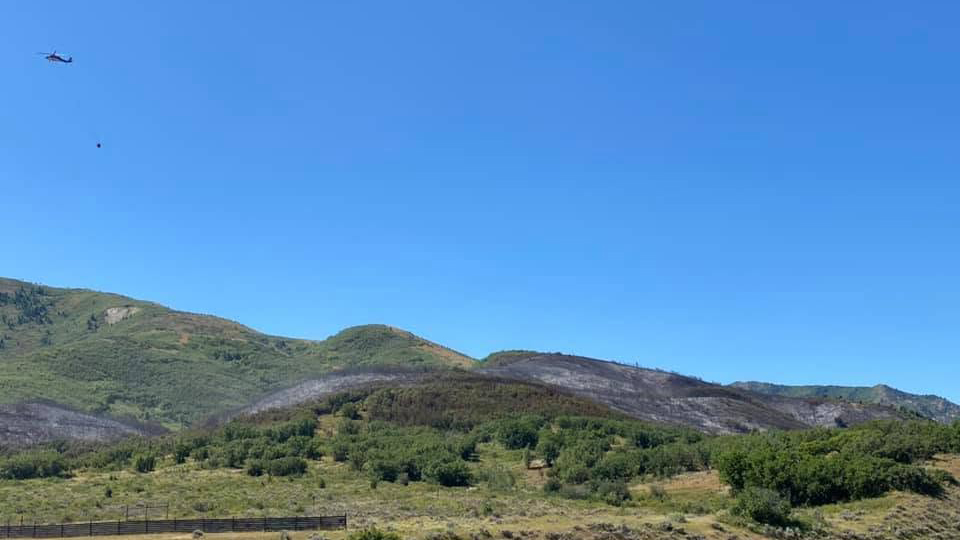
The “Parleys Fire” burned about 80 acres near Mt. Aire, forcing that community to evacuate for three days in August 2020. I-80 was also closed for several hours. Fire investigators believe a dump truck dragging chains is what started it. Photo courtesy of Utah Fire Info
Parleys Canyon Fire (August 2021)
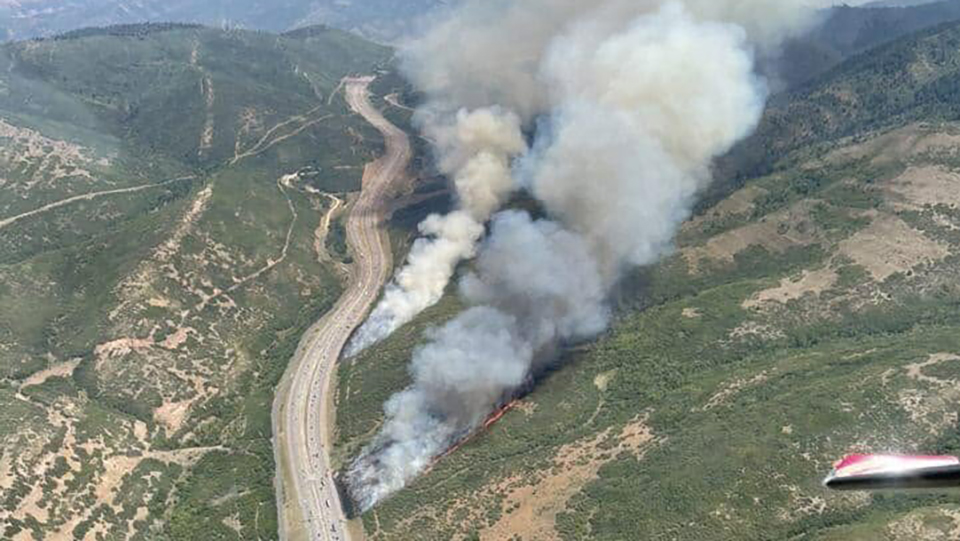
The “Parleys Canyon Fire” burned 540 acres in August 2021. It forced I-80 to close, and residents of Summit Park, Pinebrook, and Timberline had to evacuate their homes for four days. Fire investigators blamed a spark from a faulty catalytic converter, and wind made the flames spread quickly. Photo courtesy of Utah Fire Info
Brush fire at Lambs Canyon (September 2022)
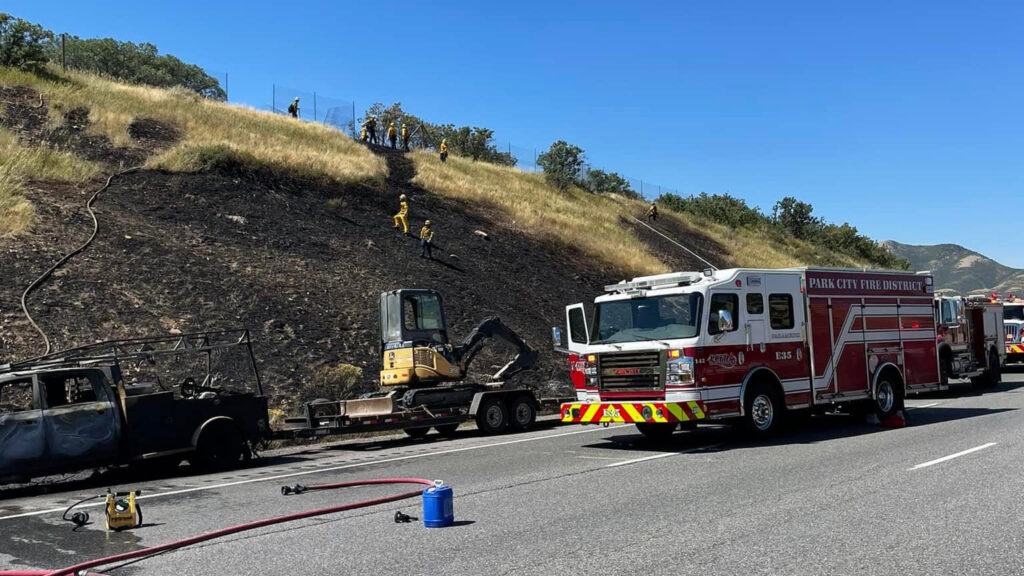
A vehicle fire on I-80 near Lambs Canyon set an acre of the surrounding brush on fire in September 2022. Eastbound Parleys Canyon was closed for several hours, but firefighters were able to get it out the same day. Photo courtesy of Park City Fire District
Share: